Fresh basil costs about $2.49 for a plastic clamshell that holds maybe six sprigs, and at least half the time I'd find it black and slimy in the crisper drawer a week later, having used one sprig. After throwing away one too many of those, I decided to grow our own on the kitchen windowsill. That was two summers ago. Some of it worked beautifully. Some of it died so fast that I started to take it personally.
Our sink window faces southwest and gets strong afternoon sun, which turned out to be the most important fact in this whole story.
What we started with
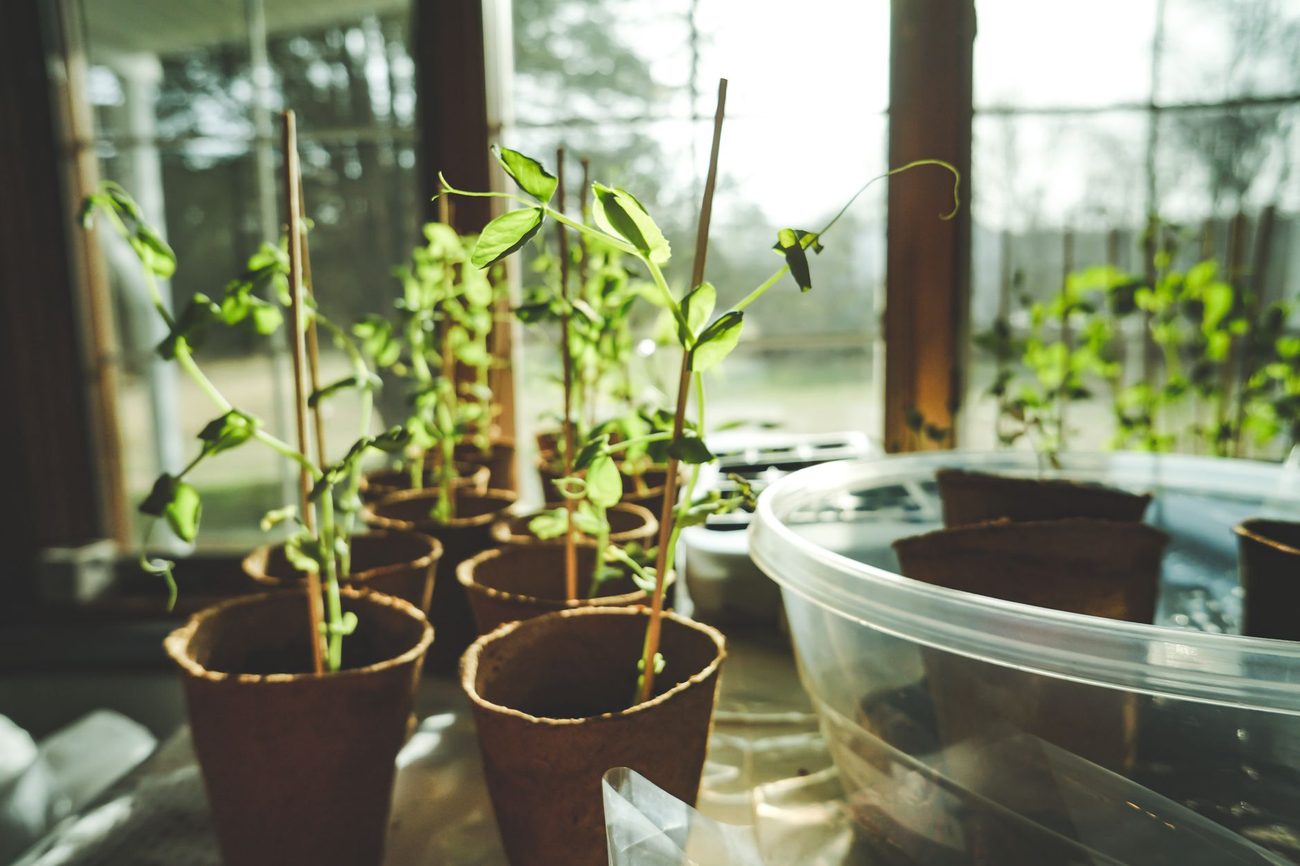
I didn't spend much. My setup cost about $15 total:
- Five small clay and ceramic pots from the thrift store, about $1 each
- A small bag of potting mix, about $6
- A few seed packets (chives and parsley), about $2 each
- Saucers I already had, with a layer of gravel so the pots don't sit in water
Every pot needs a drainage hole. Two of my thrift store finds didn't have one, and Mike drilled them with a masonry bit in about a minute. Without drainage, the roots sit in water and rot. I learned that the hard way, with parsley.
The winners
Basil, from a grocery store bunch
You don't need seeds. Take a few stems of store-bought basil, pinch off the lower leaves, and stand them in a glass of water on the windowsill. Change the water every couple of days. In about a week or two, white roots show up. When the roots are an inch or two long, plant them in a pot. One $2.49 clamshell can become three or four plants.
The key with basil is pinching. When a stem has three or four sets of leaves, snip it off just above a pair of leaves. Two new stems grow from that spot, and the plant gets bushy instead of tall and floppy. If you see flower buds forming, pinch those off too.
Chives
The easiest thing I grow. Seeds sprout in about a week, and after that you cut them with scissors like a haircut and they grow right back. They go on baked potatoes, eggs and cottage cheese at our house, and the kids like snipping them.
Mint
Mint grows no matter what you do to it. Give it its own pot, because it will crowd out anything it shares with. Ella puts a sprig in her water bottle and feels very sophisticated.
Parsley
Slower to sprout (it took almost three weeks, and I'd given up on it twice), but once it got going, it kept producing for months.
What didn't work for us
- Cilantro. It sprouted, grew about four inches, and bolted to seed in the heat of the window before I got more than one handful. Every time. I buy it now, or grow it outside in spring when it's cool.
- Rosemary. Our rosemary looked great all summer and then died over the winter. From what I read afterward, indoor rosemary hates dry furnace air and hates being overwatered even more, and I managed to do both. I'll try again, but with less water and more patience.
- Everything at once. My first try, I crammed eight pots onto a windowsill that fits five. They shaded each other and none of them did well. Fewer, healthier plants gave us more to cook with.
Keeping them alive
- Water when the top inch is dry. Stick your finger in the soil. If it's dry to your first knuckle, water until it runs out the bottom. If it's damp, leave it alone. I overwatered more plants than I underwatered.
- Turn the pots. Every few days, give each pot a quarter turn so the plants don't lean toward the glass.
- Harvest often. Herbs want to be cut. Regular trimming keeps them growing.
- Feed lightly. Once a month in spring and summer, a weak dose of all-purpose liquid plant food in the water. In winter, I skip it.
Is it worth it?
Before, I bought fresh herbs about twice a month, which was around $60 a year, and I threw away half of it. Now I spend maybe $5 a year on potting mix and a seed packet, and I cut exactly what I need. The savings aren't huge. The bigger difference is that I actually use fresh herbs now, because they're right there.
Right now, in the middle of July, the basil in our backyard garden bed is enormous. This is the time to take cuttings from those outdoor plants and root them in water. By the time the first frost comes in late October or early November, I'll have young basil plants on the windowsill, and we'll have pesto on pasta well into winter. That's the plan, anyway. The rosemary has been warned.