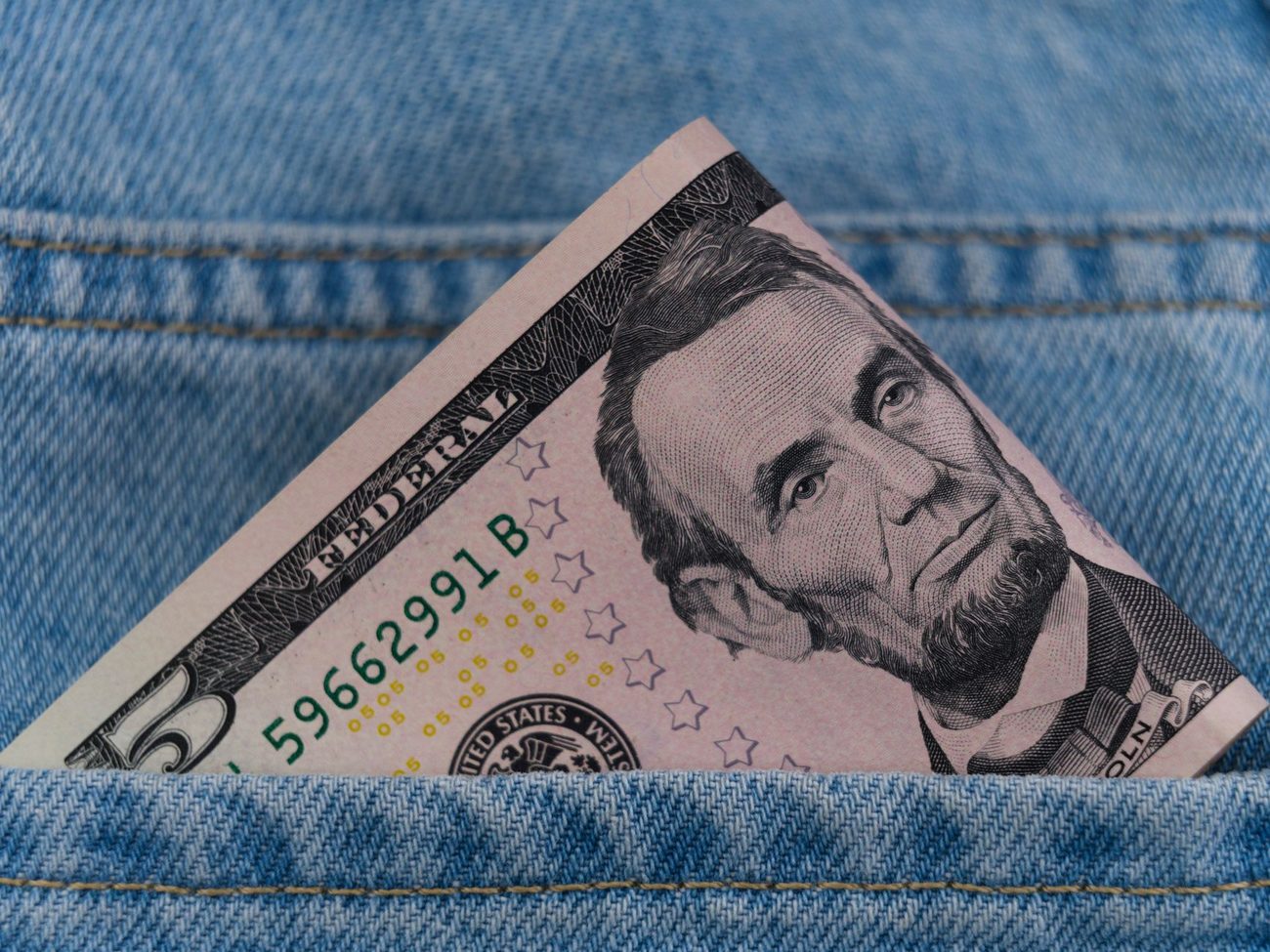
On New Year's Day, Mike and the kids and I sat on the living room floor and counted a coffee can full of five-dollar bills. Owen made stacks of ten. Rosie made one big pile and sat on it. When we finished, there were 228 bills, or $1,140. None of us could remember putting any of them in.
That's the whole appeal of what we call the $5 rule. It's small enough that you don't feel it and simple enough that you don't have to think about it.
The rule
Any five-dollar bill that ends up in my wallet goes into the coffee can at the end of the day. Not most fives. Every five. If it's in my wallet at bedtime, it goes in the can.
That's it. No math, no tracking, no deciding. Mike does the same thing with fives from his wallet, though he's less consistent about it, and I've been known to check his jeans pockets on laundry day.
I worked in a bank for years before I stayed home with the kids, and I counted a lot of other people's money. What I noticed was that people who saved in small, automatic ways usually did better than people who waited until they had "extra." Extra never comes. This is our version of that.
Where the fives come from
We don't use cash for most things. Our bills and groceries go through checking. But there's still a surprising amount of cash in our lives:
- Every other week, I get $40 cash back at Aldi for small cash-only things: the farm stand, school lunch envelopes, field trip money, the kids' allowance.
- Farm stands and yard sales almost always hand you change in fives.
- Mike picks up an occasional weekend repair job for neighbors, and sometimes they pay in cash.
- Birthday cards from grandparents to us, the adults. (The kids' birthday money is theirs.)
Once a five goes in the can, the rest of the change gets spent the normal way, which is why this doesn't feel like a sacrifice. We're only setting aside a bill that would have been broken on a gas station snack or a drive-thru coffee.
What last year looked like
I counted the can at the end of each quarter, mostly out of curiosity.
| Quarter | Bills | Amount |
|---|---|---|
| January to March | 41 | $205 |
| April to June | 62 | $310 |
| July to September | 70 | $350 |
| October to December | 55 | $275 |
| Year | 228 | $1,140 |
Summer was the best quarter because of farm stands and yard sale season. Winter was the slowest, because we're mostly home and cash doesn't move much.
What we did with it
In March, the van needed new front brakes and rotors. The bill came to $612. In the past, that would have been an ugly week, but we paid for it from the coffee can money and barely talked about it. The rest went into our savings account, and it's earmarked for a day trip to the zoo this summer. The kids have already been told the zoo trip is "five-dollar money," and Owen is now scanning every wallet in the house for fives.
What makes it stick, and when it doesn't
- No borrowing from the can. Not for pizza, not for "just this once." If we need cash, I go to the ATM. The can is a one-way door.
- Bank it regularly. Keeping more than a couple hundred dollars in a coffee can in the kitchen made me nervous, so I deposit it every quarter when I count.
- It doesn't work if you never touch cash. Some months I bought almost everything with the debit card and only saved eight or nine bills. If you're all cards, you could do something similar with a small automatic transfer every week. It's the same idea: small, regular and not something you decide on each time.
- Don't chase fives. I tried asking cashiers for change in fives for a few weeks. It felt silly and it made me spend more cash. The rule works best when it's passive.
It won't make anyone rich. It's $1,140, which on our budget is real money but isn't going to change our lives. What it did do was turn a brake job from an emergency into a non-event, and that felt like a lot.
The can is back on the shelf above the fridge, and it's already heavier than it was at this time last year. Rosie says she wants to help count again, as long as she gets to sit on the pile.